
Te kara - He Whakaputanga
HE WHAKAPUTANGA | TE KARA
A piece of our history, carried with us.
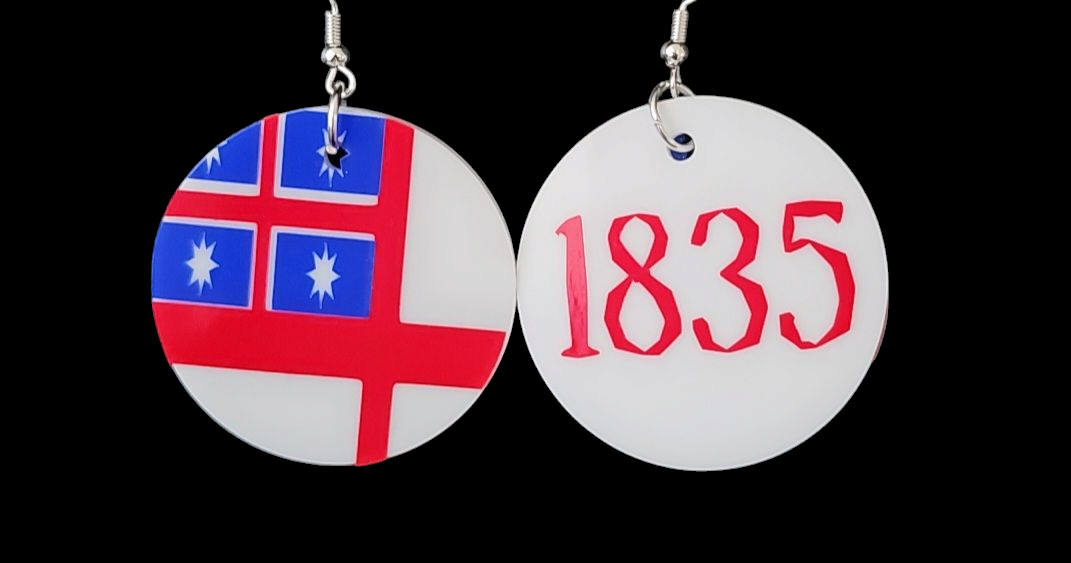
He Whakaputanga earrings, made on a white acrylic base and finished with Te Kara (the United Tribes flag) on the front and 1835 on the reverse.
Double-sided, so there's a little piece of history on both sides.
AVAILABLE OPTIONS
1. Large earrings – 5cm | $25
2. Medium earrings – 4cm | $25
3. Keyring – 5cm | $12.50
Processing time: 2–10 business days.
THE HISTORY BEHIND THE DESIGN
1834 – Te Kara o te Whakaminenga o ngā Hapū o Nu Tireni
On 20 March 1834, 25 northern rangatira gathered at Waitangi to select a flag to represent New Zealand.
Three flag designs were presented. The preferred design received 12 votes, while the other two received 10 and 3 votes respectively. The votes were recorded by Eruera Pāre, who later became the scribe of He Whakaputanga.
The flag became known as the Flag of the United Tribes of New Zealand. It was recognised by King William IV and allowed New Zealand trading ships to sail under a recognised national flag.
1835 – He Whakaputanga o te Rangatiratanga o Nu Tireni
On 28 October 1835, rangatira signed He Whakaputanga, the Declaration of Independence.
The declaration affirmed that sovereign authority and power belonged collectively to the rangatira of the United Tribes. It also set out their intention to meet regularly to make laws and govern their affairs.
The declaration referred back to the flag chosen in 1834, thanking the King of England for recognising it.
WHY WAS A FLAG NEEDED?
In 1830, the New Zealand-built trading ship Sir George Murray, partly owned by rangatira Patuone and Taonui, was seized by customs officials in Sydney.
At the time, British maritime laws required trading ships to carry a recognised national flag and registration. New Zealand had no officially recognised national flag, creating difficulties for Māori-owned trading vessels.
This helped prompt the push for a recognised flag in 1834.
MORE THAN A DESIGN
1834 gave the United Tribes a recognised national symbol.
1835 gave formal expression to their declaration of independence and collective rangatiratanga.
Together, Te Kara and He Whakaputanga are important reminders of Māori leadership, unity, identity and the right to determine our own future.